.jpeg)
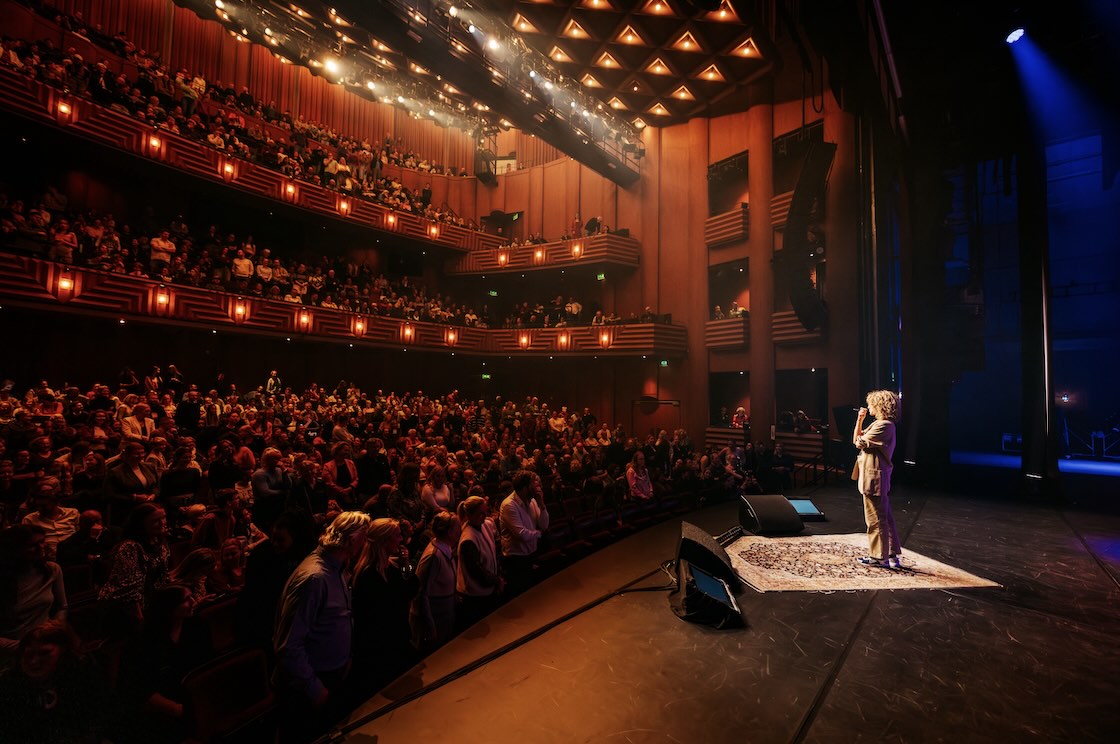

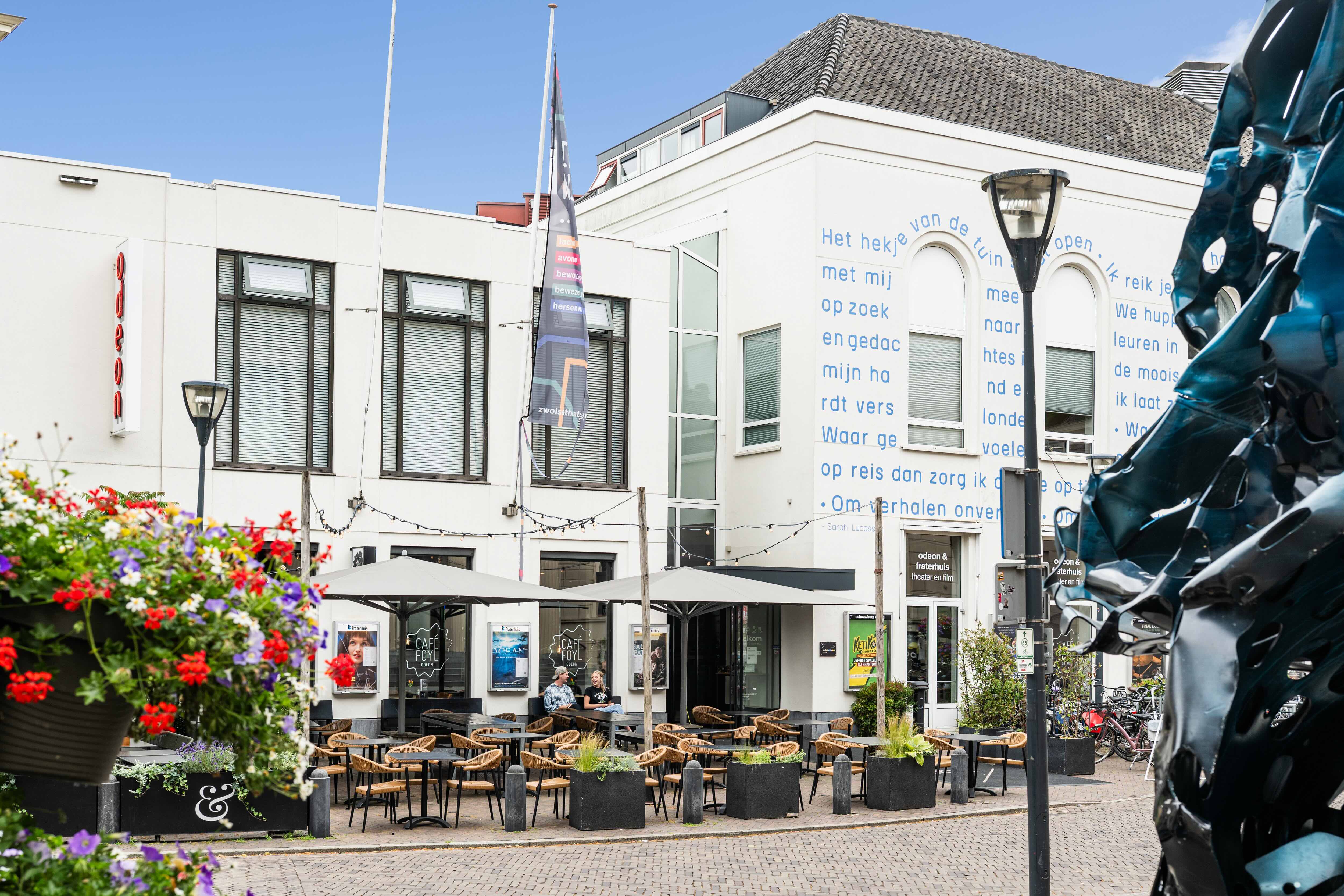
Zwolse theaters operates two venues: Theater de Spiegel, whose large auditorium hosts musicals, concerts, and other large-scale productions, and Schouwburg Odeon, where smaller spaces are home to theater, music, comedy, talent development, and more. But the organization wants to be more than a place where performances simply come and go. It sees itself as a cultural hub for the city, where different audiences and communities can come together.
For Lysette Dijk-Hartman, Marketing and Audience Services Manager at Zwolse theaters, that ambition starts with understanding the numbers: Who is in the audience? Who comes back? And which communities in the city are still underrepresented? Those insights should lead to stronger concepts, more relevant communication, and higher conversion.
We don’t want to reach people as often as possible. We want to reach them often enough, and with content that is relevant enough.
-- Lysette Dijk-Hartman
--- Marketing and Audience Services Manager, Zwolse theaters
A newsletter tailored to the individual
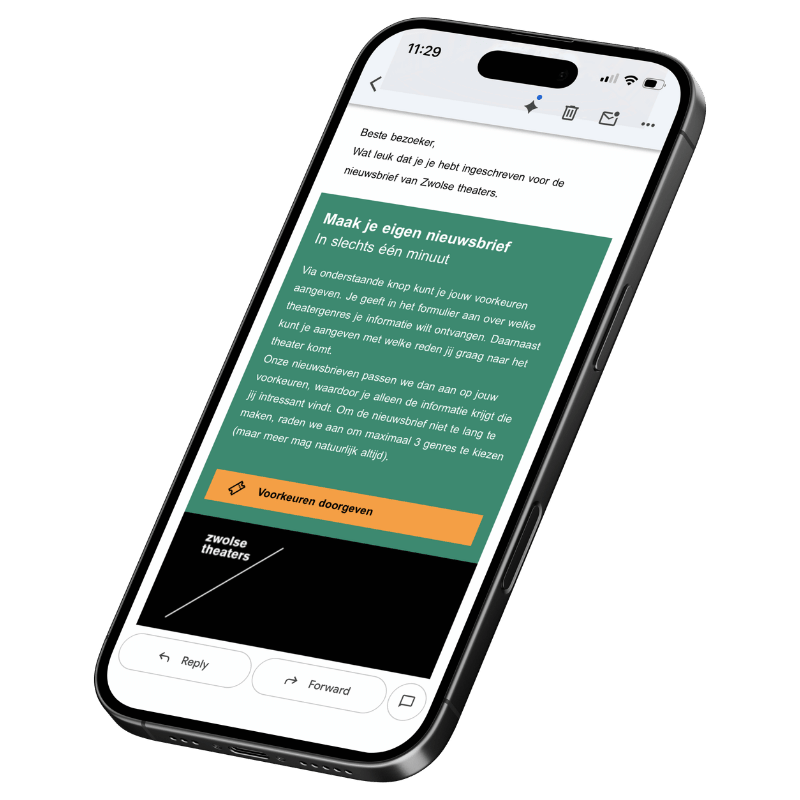
Zwolse theaters used to send a general newsletter every two weeks. Today, it sends a weekly newsletter built in layers. Everyone receives the same core content, while other sections are tailored to individual preferences, genres, and behavior. Someone interested in dance or comedy sees different content from someone interested in classical music. Subscribers who select several interests receive a broader mix of content.
The newsletter also includes personalized recommendations based on rules that take click behavior, purchasing history, stated preferences, and previous interactions into account.
The result: Zwolse theaters started sending more emails while maintaining the same conversion rate. For Lysette, that is proof that relevance matters more than simply limiting email frequency.
The same thinking extends beyond the newsletter. When promoting individual performances, the team sometimes communicates broadly and sometimes targets a smaller group of people for whom the production is particularly relevant. Not every performance needs to be promoted to everyone.
Segmenting by motivation
At Zwolse theaters, segmentation goes beyond genre. People do not always choose a performance simply because it is “comedy” or “dance.” Sometimes they want to laugh, be surprised, or simply enjoy a night out with their family.
That is why the theater also segments audiences by their motivations: not just what people attend, but why they choose to go to the theater in the first place.
This makes segmentation more human. No one belongs to a single, fixed audience profile.
“Someone might fall into segment A one time and segment B the next,” Lysette says. “I go to the theater with my family, but I also go with my father or my partner. My reasons for going are different each time.”
For the same reason, Zwolse theaters deliberately chooses not to personalize everything. Some sections remain editorial by design: these are the things we believe are important, and these are the things we want our audiences to discover.
Smart segmentation should not trap people inside a profile based on their past behavior. It should keep communication relevant while still leaving room for curiosity and discovery.
Toward a unified view of the audience
The ambition goes beyond newsletter segmentation. Zwolse theaters wants to move toward a unified customer view that brings together purchasing behavior, click behavior, preferences, social media interactions, and feedback.
Today, many recommendations are still based on static rules. Those rules are useful, but limited. The system does not yet learn enough from what someone doesn’t do.
That is why the theater is exploring the potential of a Customer Data Platform, not to replace its existing channels, but to bring behavior and preferences together in one place.
“Ultimately, you want to build 360-degree customer profiles and connect them to all kinds of channels,” Lysette says.
Even post-show service feedback could then become useful for marketing. Someone who had an excellent experience may call for a different follow-up from someone who was less satisfied.
Where marketing reaches its limits
The more sophisticated your segmentation becomes, the clearer the limits of marketing become as well.
Strong attendance in recent years has given Zwolse theaters more room to invest in audiences it has historically struggled to reach. That is a social mission just as much as it is a commercial opportunity.
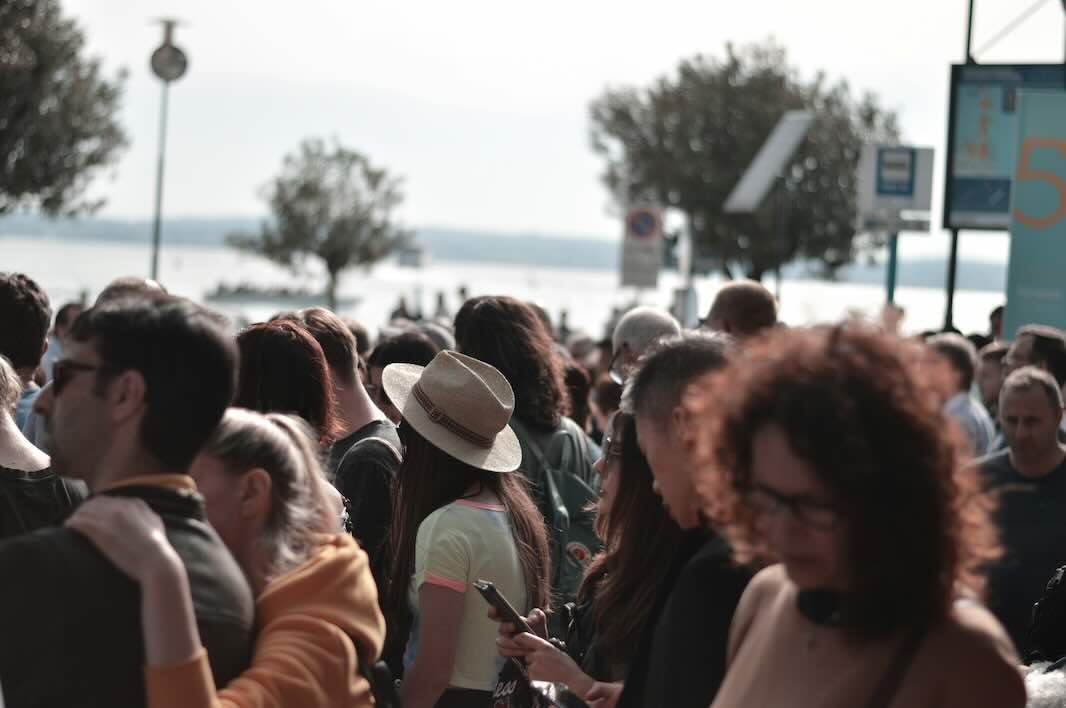
The Cultural Target Groups model and the Whize segmentation model, which is also used by the City of Zwolle, help the organization identify communities that are well represented in the city but underrepresented in its audiences.
For the segment Jong en hoopvol, which includes young adults and people starting out in their careers between the ages of 18 and 35, marketing campaigns and discounted ticket offers made little difference. The breakthrough came when people from within the group started inviting others to join them.
“That group only comes when someone else from the group says, ‘Do you want to come with me?’” Lysette says.
That insight changed the theater’s approach. Zwolse theaters hired an audience development specialist whose role is specifically to build relationships with communities that do not yet have a natural connection with the organization.
Instead of running a campaign with a fixed start and end date, the focus is on investing time and building trust.
One result is Jong en Klassiek (“Young and Classical”), a project in which a young classical music enthusiast helps build a community around classical music. Young people attend performances together, learn more about what they are seeing and hearing, get a look behind the scenes, and in turn invite others to join them.
The impact is not immediately measured in thousands of additional visitors. The initiative involves fewer than one hundred young people, but those who participate attend more than twice on average.
“The young people we do reach become ambassadors. They bring an increasingly large group with them,” Lysette says.
Programming as a partner
At Zwolse theaters, marketing and programming share responsibility for audience numbers.
After programming presentations, the teams do not just consider who they expect to see in the auditorium. They also ask who is not there, and what kind of programming could help bring those audiences in.
The organization even works with community programmers: people from the city who help develop programming for communities that Zwolse theaters reaches less effectively through its regular program, while creating space for voices that have not yet been represented on its stages.
One result is Tent van het Oosten, a series of performances connected by the Arabic language.
This is where the different parts of Zwolse theaters’ approach come together. Data helps the organization understand its audiences. Audience development builds relationships. Programming translates those relationships into what happens on stage. And marketing helps ensure that the right people feel that the program speaks to them.
Who attends, who returns, and who brings others along then generates new insights in turn.
From data to relationships
When it comes to personalization, it is tempting to focus mainly on the technology: more data, smarter recommendations, higher conversion.
At Zwolse theaters, that layer matters, but it is only part of the story. Data can show which communities are underrepresented and which communications are working. Then comes the work that matters just as much: understanding why people do or do not attend and building relationships that extend beyond individual campaigns.
That is what makes the Zwolse theaters approach relevant to the wider cultural sector. Not because every theater should use the same tools, but because the broader shift is a familiar one: from broadcasting to listening, and from target groups to relationships.