

KVS has an ambitious mission: to be intercultural, intergenerational, inclusive of all genders and open to everyone in Brussels. But reaching a city this diverse takes more than a single campaign. Sébastien Parizel, Communications Manager at KVS, explains how the theater shapes its communication around the character and potential audience of each production.
Who is this production for?
At KVS, the starting point isn’t a predefined target audience. It’s the production itself.
“We work very closely with our artistic team to define the audience for each production,” says Sébastien. “Then we adapt our communication accordingly.”
That means taking a different approach to every show. A Europalia co-production about the Spanish Civil War, for example, attracted Spanish residents of Brussels who had never been to KVS before. The community was already there. The production created an opportunity to connect with it.
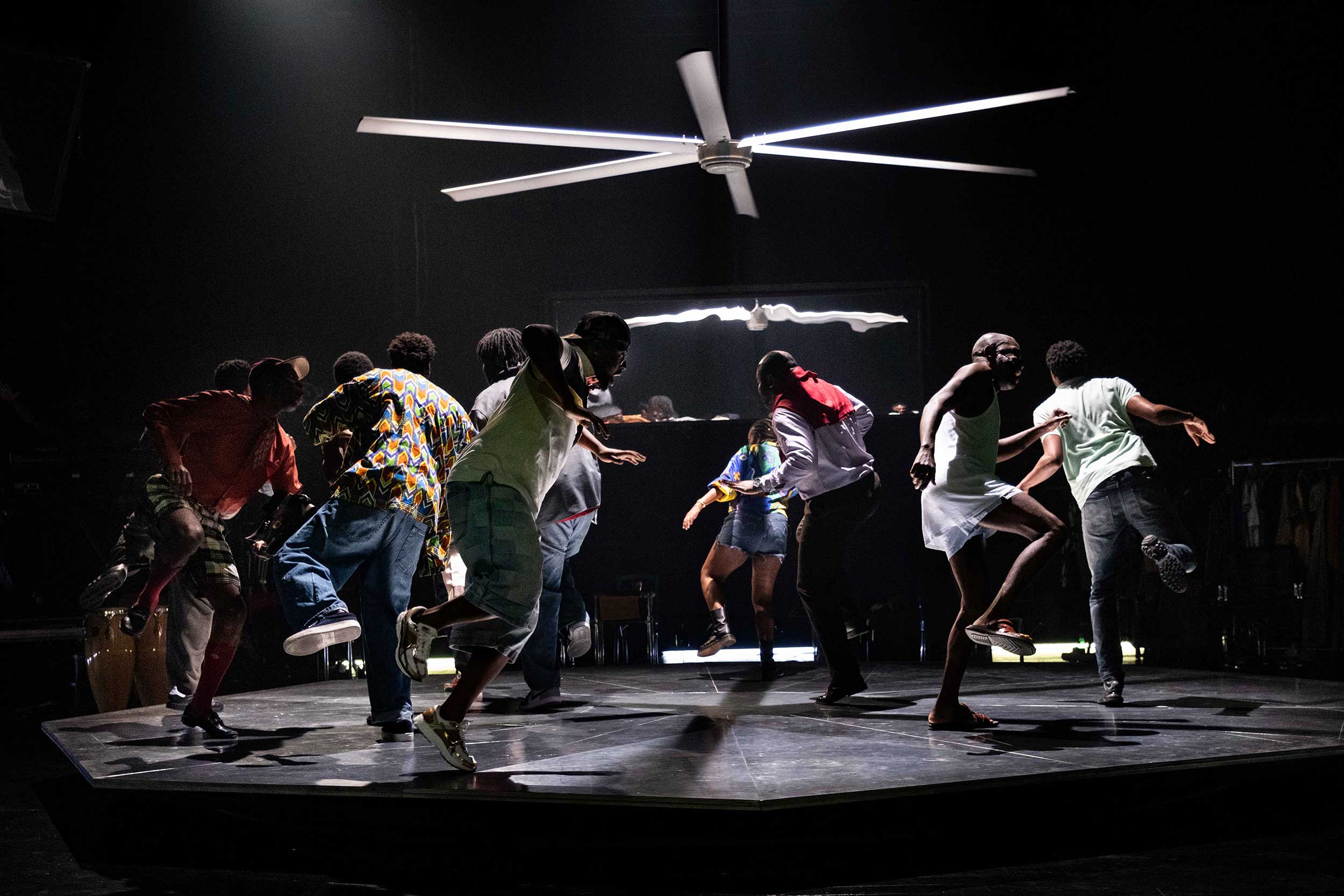
The same thinking is shaping KVS’s approach to Barbershop Chronicles this season, a production that explores barbershops across Europe, Africa and the Caribbean as social gathering places. KVS wants to reach people from Brussels’ own barbershop communities, including many who might not usually consider going to the theater. If you want your venue to be a genuine meeting place, it starts with thinking carefully about who you invite in.
The choice of channels follows the same logic. Audience research showed that print still matters to young urban audiences more than KVS had expected.
“The instinct would typically be to focus mainly on digital channels, especially social media,” says Sébastien, “while visibility across the city still has a bigger impact than we might think.”
KVS also deliberately focuses on content-led communication. Rather than simply promoting a show, it aims to communicate why a production matters and who it might speak to.
A theater that speaks many languages
Brussels is one of the most multilingual cities in the world, and KVS reflects that reality in its programming and accessibility. All performances are surtitled. Dutch-language productions have English and French surtitles, while performances in other languages are always surtitled in Dutch and usually in French as well.
“We want people to understand that they are welcome here too,” says Sébastien, “even if they don’t speak Dutch.”
This season, that idea developed into a targeted campaign called KVS Speaks Your Language, featuring stickers in a range of languages. It attracted attention beyond KVS’s expectations, with the Goethe-Institut even reaching out independently to learn more about the project.
Dance has a particular role to play in this multilingual context. Because it doesn’t depend on spoken language, it offers a natural way to connect with audiences across language barriers. That is one reason dance occupies a particularly prominent place in KVS’s program for a city theater.
%20Adel%20Setta-43.jpg)
Removing barriers to attendance
Making KVS accessible also means looking at the financial barriers that can keep people from attending. The theater uses a tiered pricing model in ticketmatic, including a season subscription that offers a 35% discount and reduced rates through Article 27 for people facing financial barriers.
This season, KVS also introduced an €8 student rate. Students request a code that they can use throughout the season.
“We saw that €15 could still be a barrier,” says Sébastien. “That €8 rate makes us more accessible.”
KVS also gives audiences the option to make a donation when purchasing tickets, with suggested amounts of €3, €5 or €10. The proceeds currently go to RITCS, the Brussels performing arts school, to support students from outside the EU whose tuition fees have risen significantly as a result of new regulations.
KVS also thinks about audience loyalty over the longer term through KVS Faces: artists the theater works with across several productions. Building those relationships over time also helps build an audience around the artists themselves.
Someone who has seen one of these artists before can receive a targeted email when a new production is announced.
“When you email people about it in a very targeted way, you immediately see the impact on ticket sales,” says Sébastien.
All of these choices in communication, pricing and programming come together around an ambition once neatly summed up by KVS’s artistic team: every Brussels resident should be able to find a reason to visit KVS at least once a season.
“Not everything we program will be for everyone,” Sébastien adds, “but every season, there will be something that appeals to you.”
In a city as diverse and fragmented as Brussels, that is no small ambition. It lies at the heart of what KVS is trying to achieve.